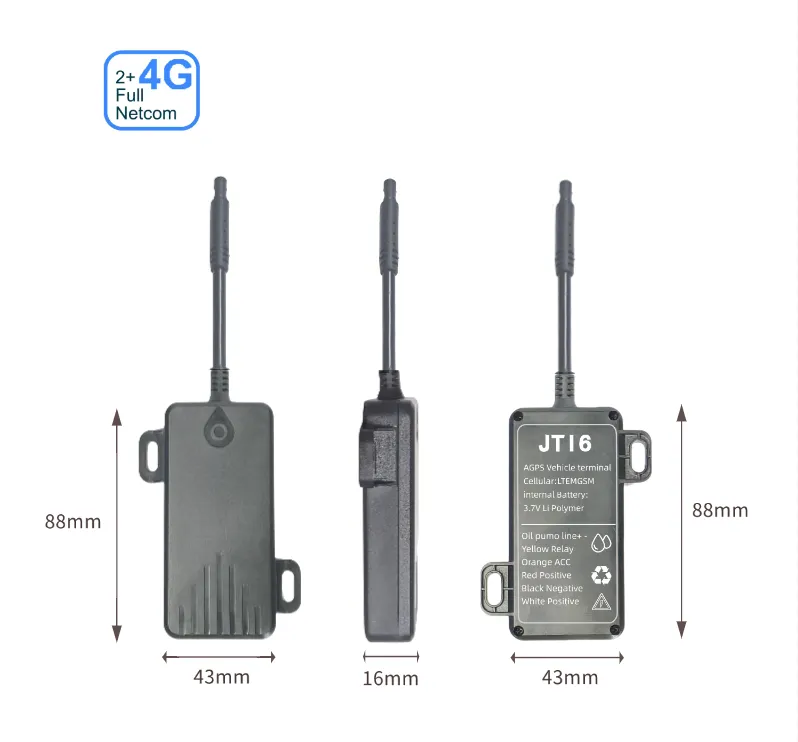
The Jinshengchang hardwired GPS tracker brings vehicle location, ignition status and compatible fuel sensor data into one fleet management solution. It helps fleet operators understand where vehicles travel, when they operate and how fuel levels change throughout daily operations.
Designed for permanent installation, the tracker connects to the vehicle’s electrical system and sends supported data to a compatible tracking platform. When paired with a suitable external fuel level sensor, it allows managers to review tank level trends together with routes, stops and ignition records.
Vehicle Tracking and Trip History
View reported vehicle locations and review previous journeys through the connected platform. Route history provides useful context for checking deliveries, service visits, equipment movements and unexpected stops.
Combining location records with fuel data helps managers investigate where a fuel change occurred and what the vehicle was doing at the time.
Fuel Level Monitoring
With a compatible external sensor, the solution collects fuel level measurements for display and analysis on the platform. After tank calibration, supported measurements can be converted into estimated fuel volume.
Sensor selection depends on the tank dimensions, tank material, fuel type and tracker interface. Measurement quality also depends on installation, calibration and vehicle operating conditions.
Refueling Records and Fuel Drop Alerts
A configured platform can identify potential refueling events from significant fuel increases and flag unusual decreases for review. Event records can include the corresponding time and reported vehicle location.
Filtering and suitable thresholds help reduce false alerts caused by fuel movement inside the tank. Suspected fuel loss should be checked against surrounding readings, vehicle activity and actual refueling records.
Fuel Consumption Analysis
Supported platform reports can combine calibrated fuel measurements with trip information to help operators assess fuel usage over selected periods.
Managers can review consumption trends across vehicles, routes or working periods and identify records that need further investigation. Reliable comparisons require consistent calibration and sufficient data; tank level changes alone do not provide a direct engine fuel-flow measurement.
Ignition Status and Operating Periods
The ACC connection provides ignition status information for reviewing vehicle usage. When combined with movement records, it helps distinguish parked periods, journeys and ignition-on stops.
Ignition-based reports can support utilization reviews and maintenance planning. ACC status indicates that the ignition is on; confirmation of actual engine operation requires an appropriate engine data source.
Integrated Fleet Management
Location, ignition and fuel information can be reviewed together through a compatible fleet platform. This gives dispatchers and fleet managers a clearer operational record for daily supervision, exception handling and reporting.
Available dashboards, alerts, report exports and data retention periods depend on the selected platform and integration package.
Applications
Logistics fleets monitoring delivery routes and fuel usage.
Construction companies supervising machinery location and fuel changes.
Agricultural operators managing tractors and farm vehicles.
Rental businesses reviewing vehicle usage and fuel records.
Field service teams comparing travel activity across company vehicles.
Mining and quarry operators supervising vehicles across large work areas.
Installation and Integration
Before deployment, confirm the tracker’s power input, cellular bands, ACC connection and fuel sensor interface. The external sensor must match both the tracker and the vehicle’s tank.
A qualified installer should complete the wiring, secure the device and calibrate the tank according to the sensor instructions. Initial testing should compare platform readings with known fuel quantities and actual refueling events.
Jinshengchang can discuss hardware selection, supported communication protocols, platform integration and OEM/ODM requirements for fleet projects. Final functions and specifications are determined by the selected tracker, sensor and platform configuration.
Descripción
The Jinshengchang hardwired GPS tracker combines vehicle location tracking, ignition status detection and external fuel sensor integration for fleet management. With a compatible fuel level sensor and a configured tracking platform, it helps operators review fuel level changes alongside vehicle routes, stops and operating periods.
Fuel monitoring is useful for vehicles that require both route visibility and tank level supervision. The tracker requires a compatible fuel data source; location data alone does not measure the fuel remaining in a tank. A fuel level sensor measures tank level, while fuel consumption reports require suitable calibration and data processing. Fuel readings may change when a vehicle turns, climbs slopes or travels over rough ground. A sudden fuel decrease should be reviewed together with location, ignition status and surrounding measurements before being classified as a theft event. ACC indicates ignition status and does not always confirm that the engine is running. Actual fuel measurement accuracy depends on the sensor, tank geometry, calibration and operating conditions. Customers should confirm the exact hardware, sensor interface and required platform reports before placing an order.
El GPS no transmite la ubicación por sí solo. Elige conexión móvil, LoRaWAN o satélite según el entorno.
Qué evaluar
- Comprueba cobertura, bandas e intervalo de envío.
- Confirma autonomía en condiciones reales de señal y temperatura.
- Confirma montaje, ajuste, protección y mantenimiento.
- Confirma acceso, propiedad de datos, protocolo y cuotas.
Lista técnica
| Product Type | Hardwired vehicle GPS tracker with external fuel sensor integration |
|---|---|
| Brand / Manufacturer | Jinshengchang / Shenzhen Jinshengchang Technology Co., Ltd. |
| Positioning | GNSS positioning; supported satellite systems depend on the selected hardware |
| Cellular Connectivity | Select a communication version compatible with the deployment country and operator |
| Power Supply | Vehicle power connection; confirm the supported input voltage before installation |
| Ignition Detection | ACC input, subject to the selected model |
| Fuel Measurement | External compatible fuel level sensor required |
| Fuel Sensor Interface | Confirm the required interface before ordering; analog, RS232 and RS485 are not interchangeable |
| Sensor Selection | Match the sensor to the fuel type, tank material, tank depth and installation conditions |
| Fuel Data Processing | Tank calibration, filtering and platform configuration required |
| Fuel Consumption Analysis | Calculated from supported fuel and trip data; available reports depend on the platform |
| Fuel Alerts | Configurable fuel rise or drop rules, subject to platform support |
| Location Reporting Interval | Configurable within the supported firmware settings |
| Historical Data | Storage duration and playback functions depend on the tracking platform |
| Platform Integration | Protocol or API integration subject to technical confirmation |
| Backup Battery | Confirm availability and capacity for the selected model |
| Environmental Protection | Confirm the enclosure rating and installation requirements for the selected model |
| Dimensions and Weight | Confirm against the final hardware specification |
| Customization | Branding, firmware and integration options subject to project requirements |
Certificaciones de producto
Los certificados deben corresponder al modelo y mercado exactos. Documentos, emisores y vigencia se añadirán tras verificación.
Despliegue
- Define el uso y la conectividad.
- Confirma dispositivo, montaje y energía.
- Prueba en el entorno real y verifica avisos.
- Acuerda mantenimiento y permisos.
Desarrollo y OEM
La personalización puede incluir carcasa, marca, firmware e integración. Alcance, pedido mínimo y certificación requieren revisión.
Planificar una solución