The JSC-802 personal GPS companion tracker connects a portable device with a location-management platform, giving users a convenient way to share their reported location and request assistance.
Developed by Shenzhen Jinshengchang Technology Co., Ltd., the 802 series combines 4G LTE Cat.1 communication, GPS positioning, Bluetooth 5.1 and an LED matrix display. It can support family-oriented tracking services, independent-living projects and customized personal safety applications.
Personal Location Sharing
The JSC-802 obtains outdoor location information through its configured satellite-positioning receiver and sends records through a compatible cellular network.
Authorized users can view the latest reported position and review stored routes according to the platform configuration.
A useful tracking interface shows both the location and the time it was acquired. This helps family members distinguish a recent update from an older position recorded before a communication interruption.
Positioning performance varies with satellite visibility, installation orientation and the surrounding environment. Indoor or underground operation may require a separately configured positioning solution.
SOS Assistance at the Press of a Button
A dedicated SOS button gives the wearer a direct way to initiate an assistance request.
Depending on the device protocol and platform, the event can include the device identifier, event time, battery information and available location data.
The complete response depends on more than the button. Device connectivity, server processing, notification delivery and recipient availability all contribute to the assistance workflow.
The selected product package should clearly define button operation, supported notification methods and event acknowledgment. Direct telephone calls, voice communication and automatic emergency-service dispatch are separate capabilities and must be confirmed before being advertised.
Safe-Zone Monitoring
Safe-zone functions allow authorized users to define areas around a home, community facility or other designated location.
The platform can evaluate reported positions and generate configured entry or exit events. Appropriate boundary margins and confirmation rules help manage small variations in coordinates near a boundary.
Notification timing depends on the reporting interval, location quality and network availability. These settings should be matched to the intended use during a supervised pilot.
Compact Format with LED Matrix Display
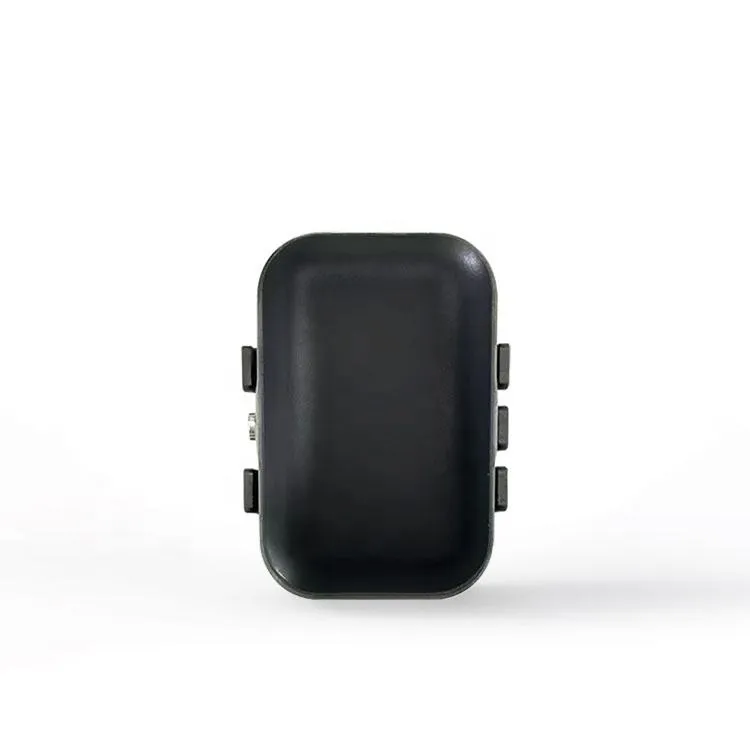
The reference device dimensions are 68 × 30 × 20.5mm.
The LED matrix provides a visual interface for supported status information and firmware-defined prompts. Display content and interaction should be confirmed for the selected version.
Wearable accessories can be discussed according to the target user and carrying method. Attachment strength, comfort and access to the SOS button should be evaluated together.
Bluetooth 5.1 for Customized Functions
Bluetooth 5.1 provides a basis for supported nearby connectivity and project-specific integration.
Potential development requirements can include interaction with a compatible mobile application, accessory or beacon system. Each function requires appropriate firmware and software support.
Bluetooth availability alone does not establish indoor positioning accuracy or a particular nearby-finding function. These capabilities should be specified and tested as part of the project.
Configurable Tracking and Power Management
Different users need different location-update schedules.
Routine monitoring can use scheduled reports, while supported temporary tracking modes can provide more frequent updates for a limited period.
Battery performance depends on positioning activity, cellular conditions, reporting frequency, display operation and other enabled functions.
Battery capacity and operating time should be confirmed for the final configuration. Working-current and standby-current figures alone are insufficient to establish a daily charging schedule.
Optional Fall and Inactivity Monitoring
Specified configurations can support motion-based fall or inactivity alerts.
These functions require suitable sensors, firmware and detection settings. Wearing position and ordinary activities can influence detection results.
Optional alerts should be validated with representative users and clearly presented as supplementary assistance features. The device is not a medical diagnostic system, and motion detection cannot guarantee that every fall or emergency will be identified.
Authorized Access and Device Management
A personal tracking service should make account access straightforward and controlled.
Project requirements can include device binding, wearer profiles, permission management, location history, alert records and ownership-transfer procedures.
Family-sharing and care-team access should be configured for authorized participants. Data retention and account removal should be defined as part of the service.
OEM and ODM Development with Jinshengchang
Shenzhen Jinshengchang Technology Co., Ltd. provides GPS hardware, embedded firmware and connected-platform development.
The JSC-802 series can be discussed for customized projects involving regional communication modules, branding, wearable accessories, LED display behavior, reporting rules, SOS workflows and software integration.
For project evaluation, provide the destination markets, target users, required carrying method, notification channels, expected reporting frequency and planned device quantity.
Overview
The JSC-802 is a wearable personal GPS companion tracker designed for everyday location sharing and SOS assistance. Combining 4G connectivity, satellite positioning and Bluetooth 5.1, it helps authorized family members or care teams check the user’s reported location and receive supported alerts. The compact device features an LED matrix display and supports configurable tracking, location history and geofence functions through the connected platform. Hardware, firmware and software customization are available for OEM/ODM projects.
The user carries or wears the JSC-802 during daily activities. The device obtains location information and reports it according to the configured tracking schedule. Authorized family members or support staff can check the latest reported position and its timestamp through the connected application or platform. When assistance is needed, the wearer presses the SOS button according to the supplied operating instructions. The device initiates an SOS event through the available cellular connection. The receiving system processes the event and notifies the configured recipients using the supported channels. Where safe-zone monitoring is enabled, the platform evaluates suitable location records and generates configured entry or exit alerts. Low-battery and offline notifications help users identify charging or connectivity issues. If a fresh position is unavailable, the platform should clearly identify the last known location and its age.
GPS positioning does not transmit a location by itself. Cellular, LoRaWAN or satellite connectivity must be selected for the operating environment.
What to evaluate
- Check local coverage, supported bands and reporting frequency before choosing a device.
- Confirm battery life under real conditions. Signal strength, reporting interval and temperature affect performance.
- Confirm mounting, fit, enclosure protection and maintenance with the final hardware specification.
- Confirm platform access, data ownership, integration protocol and recurring costs.
Technical checklist
| Model Series | JSC-802 |
|---|---|
| Product Category | Personal GPS companion tracker |
| Cellular Communication | 4G LTE Cat.1 |
| Legacy Network | 2G support where included in the selected version and available locally |
| Cellular Bands | Confirm according to module configuration and destination country |
| Positioning | GPS / GNSS; supported constellations subject to module configuration |
| Positioning Reference | Less than 10m under suitable outdoor conditions; actual results depend on the environment |
| Bluetooth | Bluetooth 5.1 |
| Display | LED matrix |
| Emergency Function | SOS button |
| Hot Start Reference | Approximately 1 second under specified receiver conditions |
| Cold Start Reference | Approximately 32 seconds under specified receiver conditions |
| Working Current Reference | Less than 60mA at 4V under the specified operating mode |
| Standby Current Reference | Less than 1mA at 4V under the specified standby mode |
| Dimensions | 68 × 30 × 20.5mm |
| Battery Capacity | Confirm for the selected 802 configuration |
| Charging Interface | Confirm for the selected version |
| Weight | Confirm for the final device and accessory configuration |
| Water Resistance | Confirm the exact tested protection rating |
| Platform Functions | Location display, route history, geofences and supported alerts |
| Optional Functions | Fall detection, inactivity monitoring and customized reminders |
| Integration | API and private-server options subject to project requirements |
| Customization | Logo, firmware, accessories, enclosure and software |
Product certifications
Certification documents must match the exact product model and target market. Verified documents, issuing bodies and validity details will be added when supplied.
Deployment
- Define the use case and local connectivity.
- Confirm device, mounting and power supply.
- Pilot in the actual environment and verify alerts.
- Agree on maintenance and access permissions.
Development & OEM
Customization may cover enclosure, branding, firmware and integration. Scope, minimum order and certification require review.
Plan a custom solution